
ESG –SUSTAINABILITY REPORTING
Free up resources and create long-term value –
how ESG data drives business success
beyond just meeting regulatory requirements
ESG data has long since moved from being a reporting requirement to a strategic asset that impacts profitability, risk and competitiveness. Investors, customers and governments now expect documented sustainability performance, but the most successful businesses use ESG data to drive their business – not just fill out forms.
With RetailTrx, we help you collect, structure and quality-assert POS, CPRF and ESG data across your value and supply chains, so you can meet requirements such as CSRD/ESRS while identifying new opportunities for cost reduction, risk mitigation and growth.
The goal is to make ESG reporting a tool for better and faster decisions – from purchasing, delivery security and assortment to supplier collaboration and long-term value creation.
Data- og information sources
RetailTrx breaks down data silos
while making both
the value and supply chains transparent
Since the data and information are spread across disconnected tools – such as CRM and ERP systems, cloud services and custom applications, we transform these into CSRD/ESRS value chain data. Then we add the business semantic layers and the full analytical and business context needed, before transferring all the data to a unified and accessible data layer.
In this way, the data is ready for use and will generate accurate and meaningful results in ESG reporting, Scope 3 work and in dialogue with auditors and external ESG consultants. Thus simplifying the sharing of valuable data across the companies’ various IT systems and applications.
Below is an overview of the data sources from which we collect data and which we then continuously and in real time monitor for changes and activities that may change or affect both the operating assumptions and ESG-related conditions for the various companies:

ESG‑modules – short bridge to the services
We have structured our ESG offering into modules that mirror the practical journey many companies are on: from getting control of the underlying data, via robust reporting, to using ESG insights actively in strategy and day‑to‑day operations. You can start where the need is greatest today – for example CSRD/ESRS reporting – and then build out more advanced analysis, scenarios and business integration over time.

Gain an overview of your ESG data across systems and the value-/ supply chains, and build a robust data foundation for both reporting and decision‑making.
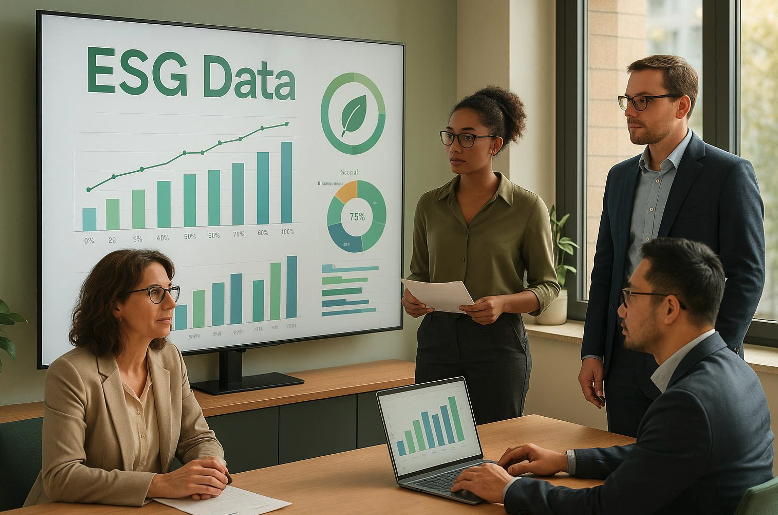
Turn complex requirements like CSRD/ESRS into practical reports and dashboards, with one trusted “source of truth” for your ESG figures.

Use ESG insights actively in procurement, assortment and supplier strategy, so sustainability contributes to lower risk, better profitability and long‑term value creation.
The first step in solid ESG reporting is gaining control of your data. We help you map which ESG data already exists in your current systems (ERP, procurement, logistics, supplier portals, etc.) and which gaps need to be closed – especially related to the supply chain and Scope 3.
We then establish a practical data model and collection/update routines that allow ESG data to be maintained continuously, not just once a year.
The goal is a holistic, audit‑ready and business‑relevant data foundation that can be used both for reporting and for ongoing management information.
Once the data foundation is in place, we translate requirements from CSRD/ESRS and other relevant frameworks into concrete reports and dashboards tailored to your business.
We set up templates for mandatory reporting, while ensuring that key figures and explanations can be presented in a way that is understandable for the board, management, customers and other stakeholders.
The solution can be integrated with your existing BI tools or delivered as standalone web‑based overviews.
You get a single “source of truth” for ESG reporting and reduce the risk of manual errors, duplicate work and discrepancies between internal and external figures.
The real value of ESG emerges when the data is used actively in operations and strategy work.
In this module, we connect ESG insights to commercial goals – for example by analysing how supplier choices, packaging, transport solutions or assortment decisions affect both footprint, costs and risk.
We identify concrete improvement initiatives and prioritise them together with you based on impact, feasibility and time horizon.
This way, sustainability work becomes an integrated part of ongoing decision support, on par with finance and operational performance – not a side project that only lives in the annual report.